
Wednesday, May 26, 2010


Tuesday, May 25, 2010


Saturday, May 8, 2010
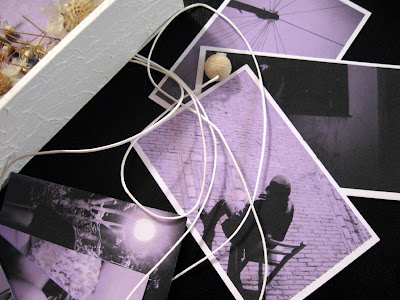
Boris 'Mabuta No Ura' Limited Edition Box Set
Essence Music in Brazil cranked out 199 of these, a soundtrack to an imaginary film conceived entirely in the minds of Japanese drone gods Boris. I pre-ordered this not knowing exactly what the box set would contain besides the CD. Needless to say, I was blown the fuck away when I opened the package...




Wednesday, May 5, 2010
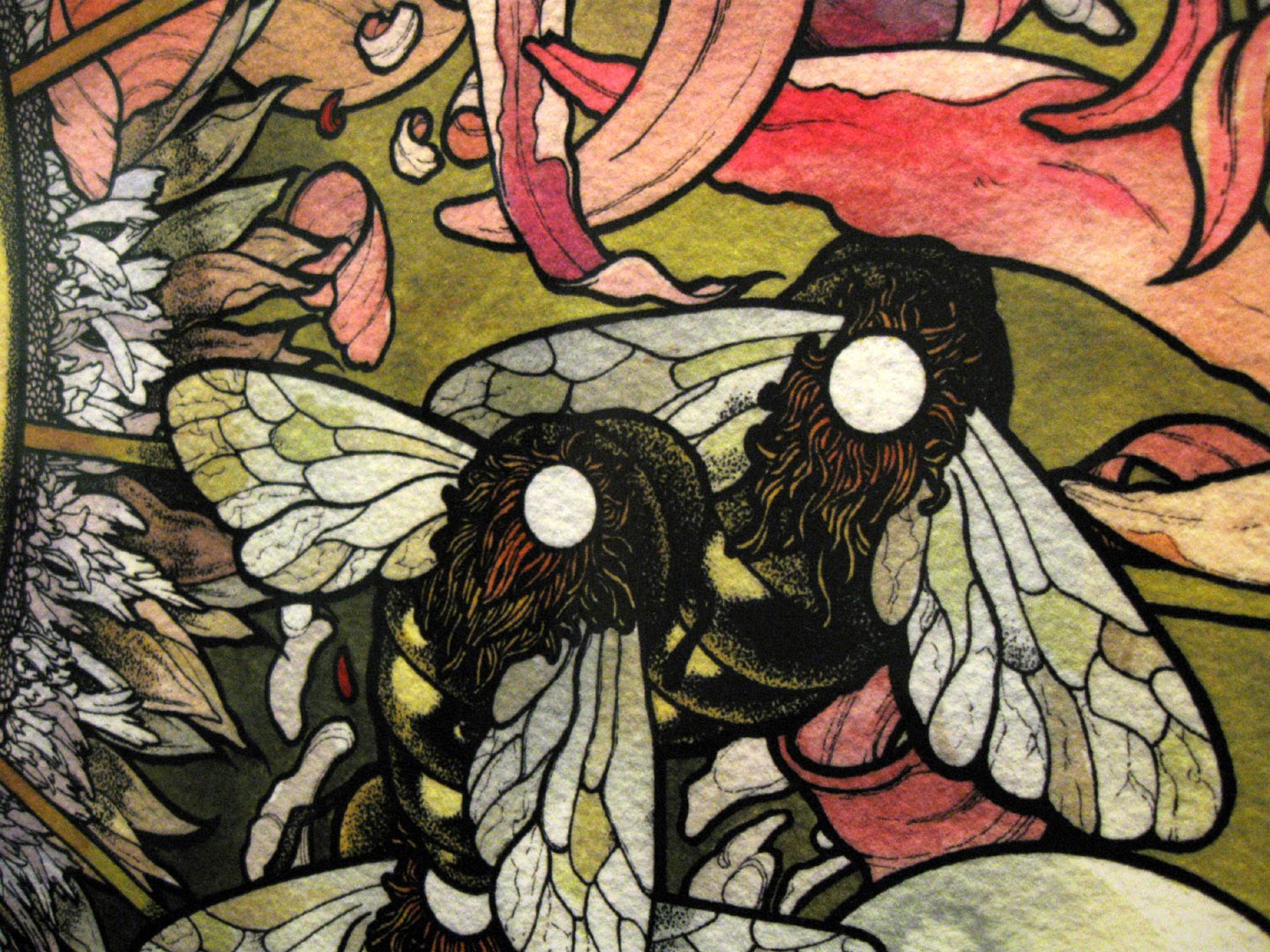
Torche 'In Return' CD/10" EP
A stunning package designed and with artwork by the one & only John Dyer Baizley.




Tuesday, May 4, 2010
Celestial Navigations: The Short Films Of Al Jarnow
by Noel Murray February 24, 2010
When the public-television movement really began to take hold in the late ’60s, the early syndicated offerings included showcases of avant-garde theater, vérité documentaries, and experimental film. When Children’s Television Workshop launched Sesame Street and 3-2-1 Contact, it embraced the spirit of early public television, combining a modified version of street theater (with Muppets!), slice-of-life films (hey, here’s how crayons get made!), and mind-bending animation. Al Jarnow was responsible for some of the most unusual examples of the latter: a yak’s tribute to the letter “y,” cosmic explorations of man’s place in the universe and in the flow of time, a succession of Styrofoam balls forming the face of Abraham Lincoln, and so on. Later in his run with CTW, Jarnow got even more abstract, illustrating cause-and-effect in simple stop-motion images, much like the Baby Einstein videos would do a decade later.
Celestial Navigations: The Short Films Of Al Jarnow combines Jarnow’s familiar kid-friendly cartoons with an assortment of his more esoteric work: experiments with color, mutating grids and cubes, trippy looping effects, and direct scratching on celluloid—all done for shorts that Jarnow would screen for a handful of friends and cinephiles in New York’s underground cinemas and museums. Many of Jarnow’s best films began with him tinkering in his home studio, either building elaborate devices to capture light, or sketching patterns on a succession of index cards. Like the underground cartoonists of the late ’60s, Jarnow didn’t see much distinction between the kind of art that might appeal to children and the kind that would wow aesthetes; with a few tweaks here and there, his avant-garde films could’ve aired on Sesame Street, and his Sesame Street films could’ve played at Anthology Film Archives. The connection between them all is Jarnow’s visible hand, scribbling on paper, moving objects in increments, and puzzling out the way the universe works, one dancing seashell at a time.
From avclub.com
Subscribe to:
Posts (Atom)